SSI Traffic Solutions: Traffic Safety Products in USA and Canada
Traffic Safety Products in USA and Canada

Why Are Cone Signs Essential for Global Buyers?
Cone signs are small, but their safety role is remarkably large. They guide drivers, protect workers, and mark hazards within seconds. In crowded construction zones, a bright orange cone can separate moving vehicles from an exposed worker. That visual boundary matters, especially when attention is limited.
The World Health Organization’s Global Status Report on Road Safety 2023 reports approximately 1.19 million annual road deaths worldwide. Not every incident involves a work zone, but the figure shows why visible traffic control remains essential. The U.S. Bureau of Labor Statistics also recorded 1,937 fatal occupational injuries from transportation incidents in 2023. These figures do not prove that cone signs prevent every collision. They do show the importance of clear, consistent warnings.
Global buyers must examine more than color and price. The Federal Highway Administration’s Manual on Uniform Traffic Control Devices, 11th Edition, emphasizes visibility, placement, and crashworthy temporary traffic-control devices. Buyers should therefore check cone height, base stability, reflective collars, weather resistance, and material performance. Requirements differ between markets. A product accepted in one country may need additional testing elsewhere.
Small details matter.
A cone that tips in strong wind is not reliable. A reflective band that fades after repeated sunlight exposure can create false confidence. Buyers should request test records, batch information, and documented quality controls from experienced manufacturers. Product certification helps, but field experience matters too. The best purchasing decision considers real roads, real weather, and real human behavior. Safety equipment is never perfect, yet careful selection makes its limitations easier to manage.
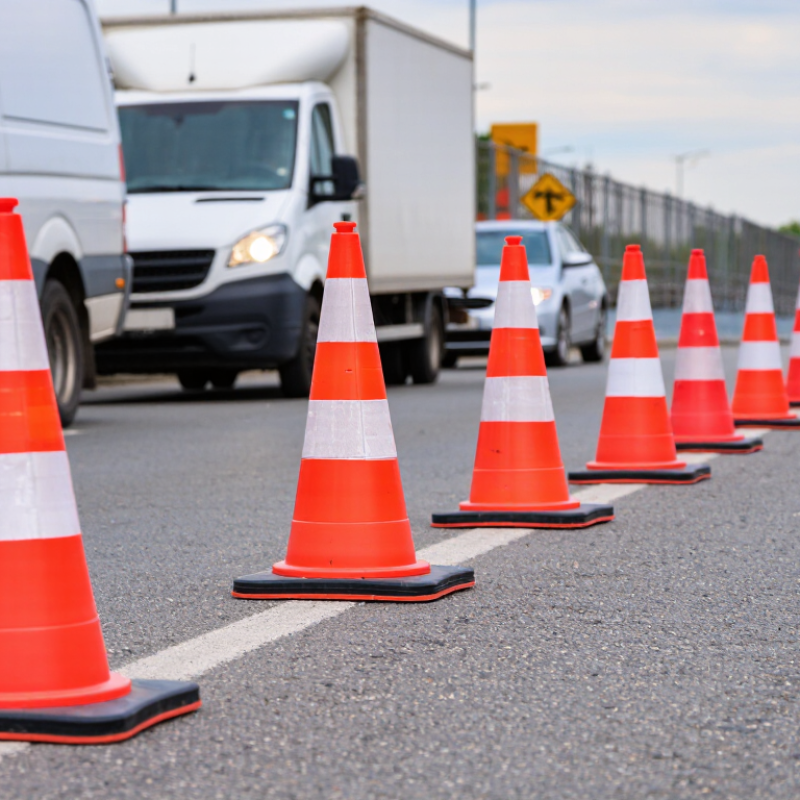
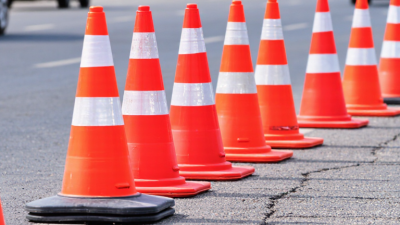
Cone signs are portable traffic-control devices that guide people around temporary hazards. Their simple shape creates a visible boundary without blocking the entire roadway. Bright orange bodies attract attention during daylight. Reflective collars return vehicle headlights at night. The base adds stability against wind, vibration, and passing traffic. Some models also accept warning lights or removable signboards. Their function is practical: slow movement, separate paths, and provide visual distance from danger.
Short warning, better decisions.
The World Health Organization’s Global Status Report on Road Safety 2023 records about 1.19 million annual road deaths worldwide. Temporary work areas require clear, immediate communication. The 11th edition of the U.S. Manual on Uniform Traffic Control Devices specifies minimum cone heights and reflective requirements for many road conditions. Global buyers should compare those requirements with local standards before purchasing.
They should also review impact recovery, UV resistance, temperature performance, base weight, and packaging efficiency. Field inspections often expose weak collars, warped bases, or unreadable surfaces. A low price can become an expensive replacement cycle. Not every “international” product fits every road.
That assumption deserves scrutiny.
Why Are Cone Signs Essential for Global Buyers?
Cone signs matter because drivers and workers need immediate, visible guidance. A bright cone beside an open trench can prevent a vehicle from entering the wrong lane. It can also create separation around forklifts, loading bays, and wet floors.
The Federal Highway Administration recorded 891 work-zone fatalities in the United States during 2022. This figure shows why temporary traffic control deserves serious attention. Cone signs are not complete protection, but they establish a clear visual boundary. Buyers should check height, reflective bands, base stability, material flexibility, and performance in rain or heat. Occupational safety guidance also stresses visible warnings and controlled access around hazards. Small details matter. A narrow reflective strip may disappear under weak lighting. A lightweight base may move in strong wind. Some specifications look impressive, yet field performance can disappoint.
Tips: Select cones according to road speed, working conditions, and viewing distance. Test visibility at night, not only indoors. Ask for independent test reports, material data, and documented quality inspections. Standards differ between markets, so local safety requirements still need review. This step is often missed. A consistent color alone does not guarantee effective warning. Cones should be positioned with enough spacing, checked after impact, and replaced when damaged or faded. Sources: Federal Highway Administration, Traffic Safety Facts; Occupational Safety and Health Administration, workplace hazard-control guidance.
| Cone Height | Approx. Metric Height | Typical Application | Visibility Considerations | Recommended Placement | Buyer Safety Check |
|---|---|---|---|---|---|
| 18 in | 45.7 cm | Indoor areas, private parking lots, low-speed facilities and short-term hazard marking | Suitable for close-range visibility; less suitable for fast-moving traffic or long sight distances | Place near the hazard where pedestrians and drivers have a clear line of sight | Confirm that the base is stable and that the color contrasts with the surrounding surface |
| 28 in | 71.1 cm | General roadwork, facility entrances, loading areas and moderate-speed access roads | A practical general-purpose size; reflective bands improve recognition in low-light conditions | Use at transitions, lane edges, work zones and temporary closures | Check the cone height, band configuration and base dimensions against the destination market’s rules |
| 36 in | 91.4 cm | Highway work zones, roadside maintenance, construction areas and higher-speed traffic environments | Greater visual prominence and longer detection distance than shorter cones | Position in advance of hazards and use with an appropriate traffic-control layout | Verify required retroreflective material, color, dimensions and impact performance before purchase |
| 45 in | 114.3 cm | Locations requiring enhanced conspicuity, including large work zones and high-exposure roadside operations | High profile improves daytime visibility; reflective elements support nighttime recognition | Use where approach speeds, traffic volume or sight-distance requirements justify a taller device | Confirm transport, storage and handling requirements because larger cones occupy more space |
| Reflective Bands | Not a height measurement | Night work, emergency response, parking control and areas exposed to vehicle headlights | Retroreflective material returns light toward the driver, improving nighttime conspicuity | Keep bands clean, intact and oriented toward approaching traffic when applicable | Request test documentation and check whether the importing country specifies band width or performance |
| Weighted Base | Varies by design | Outdoor use, windy locations, vehicle approaches and extended work zones | A wider or heavier base can reduce movement, but does not replace a compliant traffic-control plan | Select the base according to wind exposure, surface type and expected vehicle turbulence | Compare base dimensions, mass, nesting efficiency and resistance to cracking in the expected climate |
| Color and Contrast | Not a physical dimension | All environments where rapid hazard recognition is important | High-visibility colors and contrasting bands help separate the cone from pavement, equipment and background scenery | Avoid placing cones where signs, vehicles or stored materials block the driver’s view | Confirm colorfastness, UV resistance and local requirements for approved traffic-control colors |
| Material Performance | Not a physical dimension | Repeated deployment, outdoor storage, hot climates, cold climates and vehicle-contact risk | Flexible polymers can help the cone recover after impact; performance depends on formulation and temperature | Store upright or nested as directed and remove damaged cones from service | Ask for temperature range, UV-aging information, impact testing and product inspection guidance |
Note: Cone sizes, colors, reflective-band specifications and placement rules vary by country, road classification and worksite conditions. Buyers should verify the applicable national, regional or project-specific traffic-control requirements before ordering.
Cone signs help separate people from moving vehicles, equipment, and temporary hazards. The World Health Organization’s Global Status Report on Road Safety 2023 estimates 1.19 million road deaths worldwide each year. In the United States, the Federal Highway Administration recorded 891 work-zone fatalities in 2022. These figures show why visibility and stability deserve careful purchasing decisions.
1.19 million
road deaths worldwide each year
891
work-zone fatalities in the United States in 2022
Buyers should examine color performance in daylight, low light, rain, and dust. High-visibility orange is common, but shade consistency can vary between production batches. Retroreflective bands should remain readable when headlights strike them from a distance. Check the supplier’s photometric test results, not only product photographs. Standards such as EN 13422 and ISO 3864-1 can guide evaluations, although local requirements may differ.
Weight distribution matters. A wide, flexible base can resist wind and light vehicle turbulence without creating a trip hazard. Recycled polymers may reduce environmental impact, yet their cold-weather flexibility and UV resistance need evidence.
Ask for tensile, impact, temperature, and accelerated-aging test records. Also review height, stacking design, band adhesion, packaging strength, and replacement availability. Small details matter.
One specification rarely fits every market. A cone that performs well on a dry urban street may fail on a windy coastal road. Global buyers should request samples and test them in realistic conditions before approving large orders. Supplier documentation should identify the material, test method, production date, and quality-control process. Claims without traceable records are weak evidence.
Cone signs look simple, but selection becomes technical across borders. A roadwork cone approved in one market may fail another authority’s requirements. Buyers should check height, base weight, color, reflective bands, and material performance before requesting quotations. Requirements may come from national standards, municipal contracts, airport operators, or highway agencies. The written specification matters more than a supplier’s general claim.
Local conditions also change practical performance. In hot climates, soft plastic may deform under prolonged sunlight. Cold regions can make some materials brittle. Coastal areas expose cones to salt, moisture, and strong winds. Heavy rain demands stable bases and visible reflective bands. A broader base improves stability, but it increases transport and handling costs. I have seen buyers focus on unit price and overlook container space. That mistake can erase expected savings. Sometimes the lightest option is not the most economical.
Reliable purchasing depends on evidence. Ask for dated test reports, production specifications, inspection records, and samples from current production. Confirm whether reflective material remains visible after cleaning, folding, and outdoor exposure. Check packaging labels and customs documents early. A small site trial may reveal poor stability or weak color contrast. No checklist is perfect. Local advice can still be incomplete, especially when weather patterns change. Buyers should record field feedback and revise future orders instead of treating the first selection as final.
Why Are Cone Signs Essential for Global Buyers?
International sourcing of cone signs begins with a clear specification. Define height, base width, material, reflective area, color, and weight tolerance. Polyvinyl chloride may suit flexible applications, while rubber bases can improve stability. Request a physical sample before approving bulk production. Small details matter. Check the supplier’s production history, quality procedures, and batch traceability. Ask for test reports, but verify that the documents match the exact product and material. A report for another model is not enough.
During inspection, measure several units from different cartons. Use a ruler for dimensions and a scale for weight. Examine the reflective band under direct light, then inspect stitching, printing, and surface cracks. Test whether the cone returns upright after gentle bending. Photograph carton labels and record the inspection date. Independent inspection can reduce surprises, especially when shipments cross multiple borders. Still, inspection is not perfect. Packaging damage may appear only after unloading.
Maintenance protects performance after delivery. Store cone signs upright in a dry, shaded area, away from oils and sharp objects. Clean dust with mild soap and water. Avoid harsh solvents that may weaken plastic or reduce reflectivity. Inspect them before each deployment. Replace units with broken bases, severe fading, or loose reflective material. Keep a simple maintenance log with quantities, dates, and observed damage. I once underestimated storage conditions; heat changed the shape of several cones. That mistake showed me that purchasing quality is only half the job.
Common commercial traffic-cone heights used in international purchasing. Height selection affects visibility, shipping volume, storage, and suitability for different work zones.
The chart uses real metric product-size options commonly found in international traffic-management procurement: 300 mm, 500 mm, 750 mm, and 1000 mm. Buyers should verify local regulations, reflective-band requirements, base dimensions, material quality, and pre-shipment inspection criteria before ordering.