SSI Traffic Solutions: Traffic Safety Products in USA and Canada
Traffic Safety Products in USA and Canada

Choosing street signs for global buyers in 2026 requires more than comparing prices and attractive designs. A sign must remain readable in rain, sunlight, dust, snow, and heavy traffic. It should also match local language needs, road conditions, accessibility expectations, and installation practices. Small decisions can affect public safety for many years.
This guide examines the practical factors behind dependable street signs. It considers reflective sheeting, aluminum grades, anti-corrosion finishes, mounting systems, fonts, colors, and visibility at night. A coastal city may need stronger corrosion resistance, while a desert project may prioritize UV protection and heat stability. Buyers should request material specifications, test reports, production samples, and clear warranty terms. Supplier experience matters, but paperwork alone is not enough. Ask how previous signs performed after installation.
Details matter. So does context.
Global purchasing also brings less visible challenges. Translation errors, inconsistent measurements, delayed samples, and unclear packaging instructions can create expensive problems. A supplier may appear professional online yet provide weak technical support after payment. That risk deserves attention. No selection method is perfect, and even experienced buyers can overlook local installation conditions. Therefore, this overview encourages careful verification rather than quick confidence. It connects design quality with practical field experience, helping buyers choose street signs that are durable, legible, maintainable, and suitable for their intended environment.

Purpose comes first. A street sign should answer one practical question: guide, warn, identify, or regulate? Define that purpose before selecting materials, colors, or dimensions. A destination sign near a busy junction needs fast recognition. A neighborhood name sign can support slower reading. The 2023 WHO Global Status Report on Road Safety recorded about 1.19 million annual road deaths worldwide. Clear communication is not decoration; it supports safer movement.
Location changes the specification. Measure viewing distance, traffic speed, mounting height, lighting, weather, and pedestrian sightlines. The Federal Highway Administration’s 11th Edition MUTCD, published in 2023, emphasizes consistent sign design, placement, and legibility. For global projects, compare these principles with the destination country’s standards. ISO 3864 can also guide safety-sign colors and layouts. A coastal road may require corrosion-resistant fixings, while a snowy route needs higher mounting clearance. Do not assume one panel works everywhere. I have seen attractive signs become unreadable because trees, parked vehicles, or glare were ignored.
Tips: Mark each proposed location on a site photo. Record the reading distance at day and night. Check the sign from a driver’s eye level, not only from the sidewalk. Use retroreflective materials where night visibility matters, then request documented performance data. Leave room for local languages, but test the final layout carefully. Small text saves space. It can also defeat the sign’s purpose.
Define the purpose and location of each street sign
Sign size should match its purpose, viewing distance, road speed, and installation location. This comparison uses standard minimum sign-face dimensions for common signs on conventional roads from the U.S. Manual on Uniform Traffic Control Devices. Local authorities may require different dimensions, colors, or mounting heights.
Reference: Federal Highway Administration, Manual on Uniform Traffic Control Devices, 11th Edition, standard sign sizes.
Global buyers should select street signs by viewing distance, traffic speed, climate, and maintenance capacity. Aluminum offers low weight and strong corrosion resistance. Galvanized steel costs less, but it needs better edge protection in wet environments. Polycarbonate can reduce weight, although impact and temperature performance require careful testing. ASTM D4956 provides useful classifications for retroreflective sheeting, but local specifications still control final acceptance.
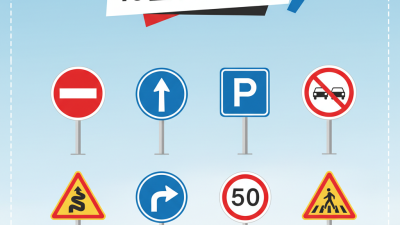
Size should follow legibility, not warehouse convenience. The 2023 edition of the U.S. Manual on Uniform Traffic Control Devices links sign design to approach speed, placement, and readable letter height. A small sign may suit a quiet access road, yet become unsafe beside a fast arterial. Color also carries meaning. Red supports prohibition, yellow warns, and white supports regulation. Green commonly guides destinations. These meanings are widely recognized, but international projects still need local confirmation.
Night visibility deserves serious attention. The World Health Organization’s Global Status Report on Road Safety 2023 estimates 1.19 million annual road deaths worldwide. Retroreflective material cannot solve every visibility problem, but it helps drivers recognize signs in headlights, rain, and darkness. Engineer-grade sheeting may suit low-risk areas. High-intensity or prismatic options usually perform better on faster roads and wider viewing angles. FHWA maintenance guidance stresses that performance declines through dirt, fading, scratches, and aging. A panel can look acceptable at noon and fail at midnight. That uncomfortable gap deserves field testing, not guesswork.
How to Choose Street Signs for Global Buyers in 2026?
Check Local Laws, Language Rules, and Accessibility Standards
A street sign should meet the rules of its installation site, not just the buyer’s catalog requirements. Before ordering, contact the local road authority or municipal planning office. Confirm permitted dimensions, colors, mounting height, border widths, and reflective performance. Some regions require specific symbols or approval marks. A sign that looks suitable may still fail inspection.
Language needs equal care. Check whether the area requires one language, two languages, or a regional script. Confirm spelling with an official map or local authority. Preserve accents, apostrophes, and character spacing. Translation software can miss cultural meaning. Shorter wording may improve visibility, but never remove information required by local regulations. Test the text from a driver’s distance, especially at night.
Accessibility standards can affect contrast, lettering, placement, and readability for people with limited vision. Use clear sans-serif characters, strong color contrast, and non-glare surfaces where permitted. Consider viewing angles for wheelchair users and pedestrians. Tactile or raised information may be required in some public facilities, but not on every street sign. Requirements vary widely.
A practical review should include a local compliance checklist, a full-size proof, and a sample installation. Measure the sign beside real curbs, trees, and streetlights. Small details matter. One overlooked mounting bracket can block the lower line. Teams should also question their assumptions, because a familiar design is not automatically a lawful or accessible one.
| Market | Primary legal or technical reference | Language and script requirements | Design and format implications | Accessibility checkpoint | Buyer documentation to request |
|---|---|---|---|---|---|
| United States | Manual on Uniform Traffic Control Devices, 11th Edition, issued by the Federal Highway Administration. State and local agencies may add approved supplements. | English is standard for most regulatory and warning signs. A second language may be required or permitted by state, tribal, or local policy. | Use the prescribed sign shape, legend, symbol, color, mounting height, letter series, and retroreflective performance. Do not substitute decorative fonts for standard legends. | Check ADA requirements for accessible routes, pedestrian crossings, detectable warnings, accessible pedestrian signals, contrast, reach range, and unobstructed placement. Accessibility rules may apply to the installation rather than the sign face alone. | Approved sign drawing, MUTCD reference, retroreflectivity information, material specification, wind-load calculation, and local agency approval. |
| Great Britain | Traffic Signs Regulations and General Directions 2016, as amended, supported by the Traffic Signs Manual and related national guidance. | English is used in England and Scotland. In Wales, bilingual Welsh-English signing is widely required for public road signs under Welsh language policy and local regulations. | Select the correct prescribed diagram number, sign class, border, x-height, mounting arrangement, and color combination. Wales may require larger panels to accommodate two languages. | Consider Equality Act duties, inclusive pedestrian design, legibility for low-vision users, clear pedestrian paths, adequate contrast, and suitable placement near crossings and footways. | Approved diagram reference, bilingual artwork where applicable, reflective sheeting class, post and foundation details, and installation-location approval. |
| Ireland | Traffic Signs Manual, published under Ireland’s road traffic legislation and associated national standards. | Irish and English are used for many place-name and directional signs. The exact language arrangement depends on the sign category and location. | Allow sufficient panel width for bilingual legends, use the prescribed route symbols and colors, and verify Irish spelling and accents before production. | Review accessibility of sign location, pedestrian clear width, visual contrast, glare control, and safe positioning near crossings and footpaths. | Final bilingual artwork, Traffic Signs Manual reference, reflective performance data, structural design, and approval from the relevant road authority. |
| Quebec, Canada | Québec road-sign regulations and the Charter of the French Language, together with applicable provincial road design standards. | French is the required public language. Additional languages may be used only where permitted, and French must remain markedly predominant in applicable public signage. | Prepare French-first artwork, verify accents and terminology, and confirm sign dimensions after translation because French wording can change line length and panel size. | Check provincial accessibility requirements, pedestrian-route continuity, contrast, readable lettering, mounting height, and obstruction-free placement. | French proof approval, applicable road-authority standard, reflective material data, structural calculations for snow and wind, and accessibility site review. |
| Australia | AS 1742 series for traffic control devices, supplemented by the road rules and specifications of each state or territory. | English is the normal language for regulatory, warning, and directional road signs. Local authorities may approve culturally or locally relevant supplementary text. | Confirm the state or territory supplement, sign size, color, font, retroreflectivity, support system, and installation zone before manufacture. | Apply the Disability Standards for Accessible Public Transport and relevant access standards where the sign forms part of a public transport or pedestrian facility. | State or territory drawing, AS 1742 reference, reflective classification, UV and corrosion data, structural calculations, and site accessibility assessment. |
| New Zealand | Land Transport Rule: Traffic Control Devices 2004 and the national Traffic Control Devices Manual, with road-controlling-authority requirements. | English is commonly used. Māori names and bilingual wording may be required by local policy or selected for official place names and community contexts. | Use approved symbols, dimensions, colors, lettering, and sign supports. Confirm whether the road-controlling authority requires a bilingual layout before setting artwork. | Check the Disability Strategy and accessible-design guidance for pedestrian routes, crossings, tactile features, visual contrast, and obstruction-free sign placement. | Authority-approved artwork, Traffic Control Devices Manual reference, reflective performance, corrosion protection, foundation details, and accessibility review. |
| Japan | Road Traffic Act, national road-sign specifications, and local road administrator requirements. | Japanese characters are fundamental. Directional signs commonly add Romanized place names or route information where required for navigation. | Use the prescribed Japanese typeface, pictograms, color coding, character spacing, arrow layout, and panel proportions. Translation must be checked by a qualified local reviewer. | Review barrier-free requirements for pedestrian facilities, clear walking paths, visual contrast, sign height, glare, and accessibility around stations and public buildings. | Japanese and Romanized artwork proof, local road-authority approval, material and coating specifications, seismic or wind-load information, and installation drawings. |
| European Union cross-border projects | There is no single EU-wide street-sign code. National traffic law applies, while the Vienna Convention on Road Signs and Signals provides an international harmonization framework for participating countries. | Language rules are national or regional. Some areas require bilingual or minority-language signs, so translation must be approved locally. | Do not assume that a sign approved in one member state is automatically legal in another. Verify symbols, colors, fonts, dimensions, mounting, and reflective classes country by country. | Consider national accessibility law and EN 17210 principles for inclusive design, including visual contrast, readable information, pedestrian clear width, and accessible routes. | National sign drawing, local-language approval, conformity and material records, reflective performance, structural calculations, and accessibility compliance statement. |
| International procurement baseline | Use the destination authority’s current legal standard as the controlling document. International standards can support manufacturing quality but do not replace local approval. | Obtain official wording from the destination authority. Never rely solely on machine translation for place names, legal warnings, accents, scripts, or bilingual ordering. | Specify sign category, approved artwork, dimensions, substrate, edge treatment, reflective performance, color tolerance, mounting height, hardware, and expected service life. | Evaluate legibility, contrast, glare, viewing distance, pedestrian clearance, tactile or audible features where applicable, and maintenance access. | Request an approval drawing, language proof, compliance matrix, test reports, structural calculations, installation manual, inspection plan, and maintenance schedule. |
For global buyers in 2026, choosing street signs starts with supplier evidence, not attractive photos. Ask for dated project samples, material specifications, testing records, and production capacity. A reliable supplier explains reflective performance, corrosion resistance, print durability, and edge finishing clearly. Request a video inspection or an independent pre-shipment check. Small details matter. Confirm who manages quality when one order includes several sizes or languages. I have seen delays begin with one unapproved drawing.
Customization should be fixed before quotation. Share exact dimensions, substrate, color references, mounting holes, post options, reflectivity level, artwork files, and packing method. Request a physical sample when visibility, texture, or color matters. Digital proofs can hide errors. Check translations with a qualified local reviewer, especially for directional wording and symbols. Some suppliers accept almost anything, but that flexibility can create inconsistent batches. A controlled approval sheet is safer than a long email thread.
Compare total landed cost, not unit price alone. Include tooling, sample fees, protective film, packaging, freight, insurance, import charges, and replacement allowances. Ask for tiered pricing and a written validity period. Delivery estimates should show production, inspection, and transit times separately. Build a modest buffer for congestion or rework. It may feel inefficient, yet rushed signs often cost more. Define payment milestones, carton labels, document requirements, and the process for damaged goods. Review the agreement carefully; my past assumptions about “ready to ship” proved too vague.
How to Choose Street Signs for Global Buyers in 2026?
A reliable street sign begins with a careful quality inspection. I check the panel for flatness, sharp edges, coating gaps, and uneven printing. Small details matter. The reflective surface should remain bright under headlights and resist fading after long sun exposure. Ask for material samples before placing a large order. Compare thickness, color consistency, hole spacing, and fastener fit. A sign may look excellent in a showroom but perform poorly outdoors.
Installation needs vary by climate, mounting surface, and local road design. Confirm the pole diameter, bracket position, fixing method, and required tools before shipment. Stainless or corrosion-resistant fasteners can help in coastal areas, where salt quickly attacks weak metal. Include clear drawings with measured dimensions. Installers should not need to guess. I once overlooked a small hole-position difference, which caused delays during fitting. That mistake changed how I review technical drawings.
Long-term maintenance also affects the real purchase cost. Choose surfaces that can be cleaned with mild soap and water without damaging the reflective layer. Check whether replacement panels, mounting parts, and repair guidance will remain available. Inspect signs periodically for loose bolts, fading, dents, and water entering around drilled holes. Keep simple inspection records with dates and photographs. My own process still has room to improve, especially when conditions change between regions. A durable sign is not maintenance-free; it is easier to inspect, repair, and replace.