SSI Traffic Solutions: Traffic Safety Products in USA and Canada
Traffic Safety Products in USA and Canada

Road safety remains a critical concern for urban planners and motorists alike. Traffic delineators play a pivotal role in enhancing roadway safety. According to Dr. Emily Carter, an expert in traffic management, "Traffic delineators guide drivers and reduce accidents significantly."
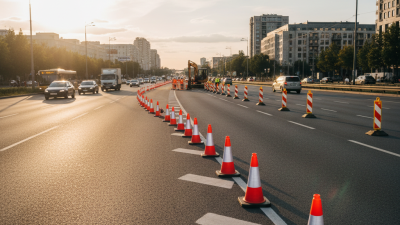
These devices create clear boundaries on the road. They help in directing traffic, especially in construction zones. Their bright colors and reflective surfaces increase visibility at night. Yet, many drivers overlook their importance until an incident occurs.
There are instances where poorly placed delineators led to confusion and accidents. This highlights the need for regular assessment and improvement. Effective placement and maintenance are vital. Inadequate attention can turn a safety tool into a hazard. Recognizing this gap can help in adopting better practices for road safety.

Traffic delineators play a crucial role in enhancing road safety. They help guide drivers, especially in tricky conditions. In foggy weather or during nighttime, visibility can be a challenge. Brightly colored delineators provide better navigation, reducing confusion on the road. Drivers need clear directions to avoid accidents.
Additionally, delineators outline lanes and highlight road changes. They are vital at construction sites where detours may occur. Without clear markings, drivers may make unintentional lane changes. This can lead to dangerous situations. A well-marked road eases tension for drivers. Frustration often leads to poor decisions. With reliable delineators, the road becomes a safer space.
However, not all delineators perform effectively. Some might fade over time. Regular maintenance is essential. Communities should invest more in road safety measures. Overall, traffic delineators are a small yet significant part of road safety improvements. Keeping roads properly marked can prevent accidents and save lives.
| Delineator Type | Material | Visibility Range (meters) | Application Areas | Average Cost ($) |
|---|---|---|---|---|
| Flexible Post | Polyethylene | 200 | Highways, Construction Zones | 15 |
| Reflective Cone | PVC | 100 | Parking Lots, Roadside | 8 |
| Traffic Barrier | Concrete, Steel | 300 | Bridges, Major Intersections | 150 |
| Plastic Drum | HDPE | 150 | Roadworks, Event Management | 12 |
| Warning Sign | Aluminum | 250 | Construction Sites, Detours | 20 |
Traffic delineators are crucial for guiding vehicles and pedestrians safely. They come in various types, each tailored for specific road conditions. For example, temporary delineators are often used in construction zones. These bright, vertical markers indicate detours or changes in traffic flow. Their visibility in poor weather is paramount for safety.
Another type is the permanent delineator, commonly found along highways. These are designed to withstand harsh conditions and direct traffic effectively. They can prevent accidents by clearly marking lanes and boundaries. Reflective materials are frequently used to enhance visibility at night. Moreover, some delineators offer flexibility; they bend when struck but return to their original position.
Despite the effectiveness of these devices, their placement is not always perfect. Occasionally, they may be misaligned, leading to confusion. In some areas, overuse can clutter the roadway and distract drivers. It is essential to evaluate their positioning and effectiveness regularly. The goal is to create a safe driving environment while minimizing driver distraction.
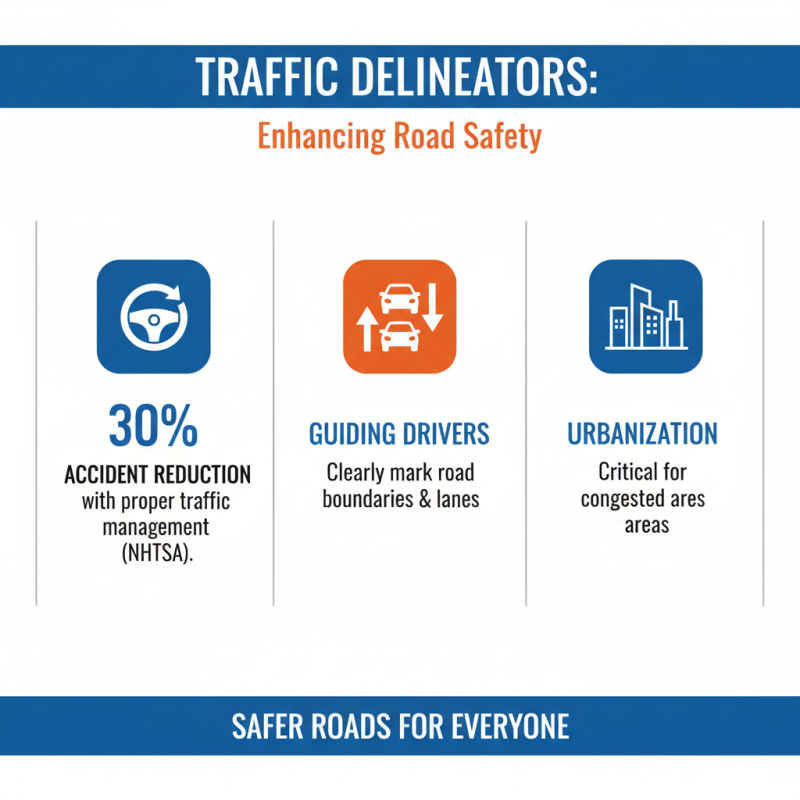
Traffic delineators play a vital role in enhancing road safety. According to the National Highway Traffic Safety Administration, proper traffic management can reduce accidents by up to 30%. These devices effectively guide drivers and delineate road boundaries, ensuring clarity in high-traffic areas. With increased urbanization, the need for efficient traffic solutions is critical.
One primary benefit of using traffic delineators is visibility. Bright colors and reflective materials make them easy to spot, even at night. A study from the Federal Highway Administration highlights that reflective delineators reduce nighttime crashes significantly. Moreover, they are cost-effective. Implementing delineators is cheaper than extensive road reconstruction. Their installation is quick, minimizing disruption to traffic.
However, reliance on these devices isn’t without risks. If placed incorrectly, they could lead motorists to confusion, increasing the chances of accidents. Regular maintenance is essential to ensure they remain visible and functional. Inadequate maintenance can diminish their effectiveness, leading to possible failures in traffic management. Continuous evaluation and feedback are crucial to improving their deployment on roads.
Traffic delineators play a crucial role in enhancing road safety. Installing them correctly can reduce accidents significantly. According to a recent report from the American Traffic Safety Services Association, proper delineation can lower crash rates by up to 30%. This highlights the importance of not only choosing the right materials but also following best practices for installation.
When installing traffic delineators, placement is key. They should be visible and strategically located, especially in high-traffic areas. For example, a study indicated that placing delineators at both ends of a curve can improve driver awareness. Regular maintenance is equally important. Damaged or faded delineators miss their mark. In fact, another study showed that nearly 60% of motorists felt unsafe due to poorly maintained road markers. Engaging in routine inspections can ensure that delineators remain effective.
Despite the clear advantages, challenges remain. Some installations may not meet visibility standards due to environmental factors. Furthermore, the cost of replacement can deter frequent updates. It’s essential to evaluate these aspects continuously. Regular assessments help in understanding the effectiveness of current practices. Improving safety requires constant effort and adaptation.
Traffic delineators play a vital role in enhancing road safety. They guide drivers and define lanes, especially in confusing situations. Research shows that clear visual guidance can significantly reduce accidents. When drivers know where to go, they make better decisions.
For instance, using traffic delineators at construction sites can limit vehicle entry to dangerous areas. This minimizes the risk of accidents, protecting both workers and drivers. In fact, studies indicate that properly placed delineators can cut accident rates in half.
Tips for effective use of traffic delineators include regular maintenance checks. Ensure they are visible and in good condition. Consider installing them in areas with frequent accidents. High-visibility colors can attract attention and prevent mishaps. Evaluate the effectiveness of your delineators periodically to stay updated on safety needs.