SSI Traffic Solutions: Traffic Safety Products in USA and Canada
Traffic Safety Products in USA and Canada

Traffic cones are vital for road safety and management. These bright orange structures guide drivers in unpredictable environments, reducing accident risks significantly. According to the Federal Highway Administration, the effective use of traffic cones can lower incidents by up to 40%. However, improper placement remains a common issue, undermining their effectiveness.
In construction zones, for instance, traffic cones create safe boundaries. A study indicates that over 50% of road work accidents involve drivers. By using traffic cones to delineate work areas, we can protect workers and guide motorists safely through detours. Yet, the challenge persists. Not all cones are visible in low-light conditions, which can lead to confusion and potential crashes.
Understanding the proper use and placement of traffic cones is essential. They serve not just as warning signs but as critical tools for traffic management. As our roadways become busier, the need for reliable traffic cones grows. Examining their limitations and improving their usage is crucial for enhancing road safety.

Traffic cones play a vital role in ensuring road safety. They provide clear visual cues for drivers. Brightly colored and highly visible, cones direct traffic away from hazards. Their placement minimizes confusion and guides vehicles safely through work zones.
In urban areas, traffic cones manage crowds and prevent accidents. They delineate pedestrian walkways and activate attention from drivers. In situations where road conditions are precarious, such as during storms or construction, cones become even more critical. They create boundaries that protect both workers and drivers.
Yet, cones are only effective when used correctly. Misplaced or insufficient cones can lead to dangerous situations. Drivers may overlook cones if they are dirty or damaged. Regular checks and maintenance are necessary for effectiveness. The presence of traffic cones is essential, but attention to detail is crucial for maximizing their impact on road safety.
Traffic cones come in various types, each designed for specific uses. Standard traffic cones are often orange with reflective stripes. They create visible barriers in construction zones and during road maintenance. These cones can also guide drivers in emergency situations. The bright color grabs attention, making them effective in alerting passing vehicles.
Another type is the delineator cone. These are typically narrower and taller, promoting better visibility. They are used for lane division during road work or in parking lots. This cone’s shape allows it to remain stable in windy conditions. However, over-reliance on these cones can lead to confusion if placed too closely.
Safety cones are sometimes overlooked. They might seem simple, but their placement can significantly impact traffic flow. Misplacing them could lead to accidents. Road management relies too heavily on traffic cones without proper signage. This reflects a need for improvement in communication with drivers.
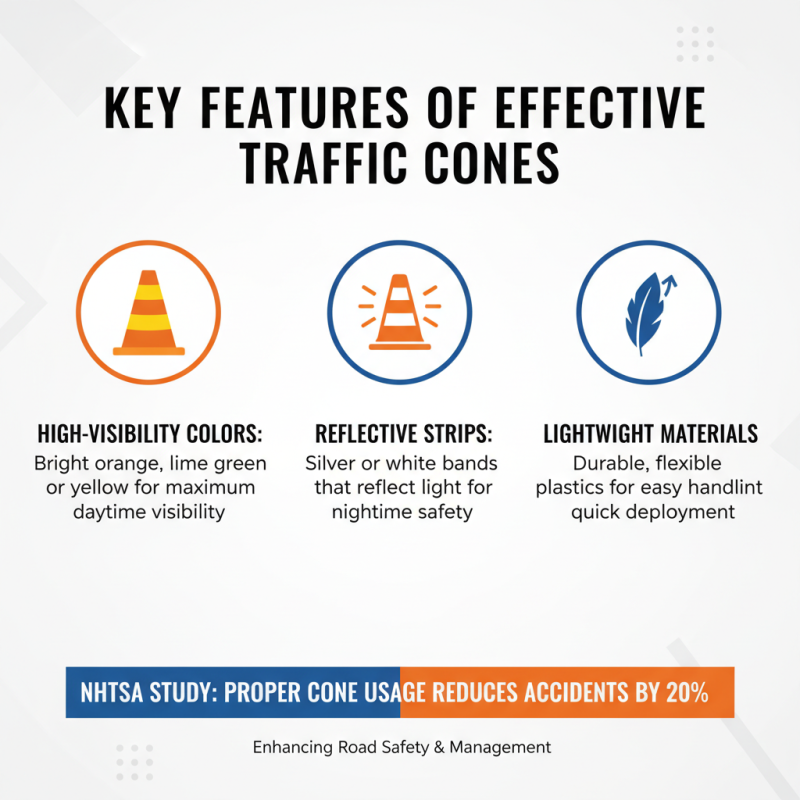
Traffic cones play a vital role in road safety and management. Their visibility and durability are crucial. Effective traffic cones typically feature high-visibility colors, reflective strips, and lightweight materials for easy handling. According to a study by the National Highway Traffic Safety Administration (NHTSA), properly marked construction sites with cones reduce accidents by 20%.
When deploying traffic cones, consider their height and weight. Taller cones are more visible during the day. Heavier cones resist wind and stay in place better. Additionally, cones should be made from materials that withstand various weather conditions, ensuring reliability over time. Studies indicate that brightly colored cones are seen more quickly by drivers, enhancing safety on busy roads.
Tips: Always use a sufficient number of cones to create clear boundaries. Place them at intervals that drivers can easily see and understand. Remember, even a small oversight in positioning can lead to serious accidents. Regular inspections of your cones for wear and tear are essential. Small cracks may seem minor, but they can significantly reduce visibility and effectiveness.
Proper traffic cone placement significantly enhances road safety. To start, cones should always be set up in a zigzag pattern, which creates visual barriers. This pattern emphasizes caution and guides drivers through construction zones or hazardous areas. For example, placing cones four to six feet apart helps maintain visibility while ensuring that drivers do not enter restricted zones.
Consider the positioning of cones based on road conditions and traffic volume. During peak hours, cones should be placed more frequently to manage lanes effectively. In low-traffic areas, wider spacing may suffice. However, placing cones too closely can create confusion. It's important to strike a balance. Reflective tape on cones can greatly improve their visibility at night, making them essential for late-night construction.
Monitoring cone placement is equally important. Regularly check that cones are upright and securely positioned. Wind or vehicle movements can displace them. Frequent inspections ensure they remain effective in guiding traffic. Issues can arise when cones are ignored. Neglect can lead to accidents or confusion among drivers. Ultimately, thoughtful traffic cone placement is vital for maintaining road safety. Proper attention to detail can prevent misunderstandings on the road.
Traffic cones play a crucial role in managing traffic flow. They are commonly used in road construction and maintenance zones. The bright colors and reflective surfaces draw the attention of drivers, promoting safety. Cones help define detours or closures effectively, ensuring vehicles understand where to go. Without these visual cues, confusion can arise, leading to potential accidents or traffic jams.
In urban areas, traffic cones are essential during events or emergencies. They can quickly block off lanes or redirect traffic. Their portability allows for rapid deployment in critical situations. This adaptability helps maintain a steady flow of traffic. However, improper placement or insufficient cones can lead to chaos. Clear communication with drivers is vital.
While cones are effective tools, potential oversight can occur. Some drivers ignore or misinterpret the warnings. Education on the importance of these signals is necessary. Local authorities should provide regular training for proper cone usage. This investment mitigates risks and improves road management. A better-informed public creates a safer driving environment.